Two ultra-luxury projects can arrive at similar price points by completely different routes. One assembles the best names available and layers a hotel operator over the result. The other builds almost everything itself and refuses to outsource the finish. Read as a question of method rather than of features, Embassy One North Tower vs TE Pursuit of a Radical Rhapsody exposes a divide that runs through the whole luxury housing market and rarely gets discussed openly.
The Case for Assembling the Best Available Names
Embassy ONE is a curated project in the literal sense. HKS handles architecture, Yabu Pushelberg the interiors, P Landscape of Thailand the grounds, and Four Seasons the service platform that turns 59 residences into India’s first Four Seasons Private Residences. Each of those is a specialist brought in for one discipline.
The strength of the model is that every component is best-in-class and independently verifiable. A buyer does not have to trust Embassy on interior craft; they have to trust Yabu Pushelberg, whose work exists to be inspected elsewhere. The service standard can be tested by spending an afternoon in the 230-key hotel that already operates on the same eight-acre estate. The weakness is that the coherence of the whole depends on coordination between parties who will eventually disperse, and the recurring service charge that sustains the platform is permanent and materially above conventional maintenance.
The Other Half of Embassy One North Tower vs TE Pursuit of a Radical Rhapsody: The Case for Making It Yourself
Total Environment runs the opposite model. Founded in 1996 by Kamal Sagar, an architect trained at IIT Kharagpur, the practice holds architecture and construction under one roof and manufactures much of what goes into each home: furniture, doors, windows, metal and glass work, masonry, flooring and specialised interiors. Homes arrive furnished and are personalised through eDesign, the firm’s own interior tool, in Blue or Purple specification grades.
The strength here is accountability. One party is answerable from first drawing to finished home and through long-term maintenance, and the firm has delivered more than six million square feet of furnished, individually customised homes to over 1,600 customers across four cities. It also pioneered the cantilevered terrace garden in 1997, a form since widely copied. The weakness is that the buyer is trusting a single practice on every discipline at once, with no external name to fall back on if the standard slips.
How the Two Methods Show Up in the Finished Product
The philosophies are legible in what each project treats as non-negotiable.
| Design Commitment | Embassy ONE North Tower | TE Pursuit of a Radical Rhapsody |
|---|---|---|
| Signature idea | Branded service inside a hotel estate | A garden with every home, to the 27th floor |
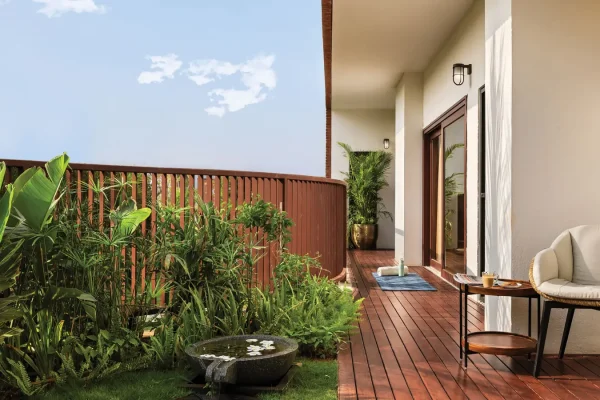
| Outdoor room | Expansive private decks | Terrace garden with an engineered tree tub |
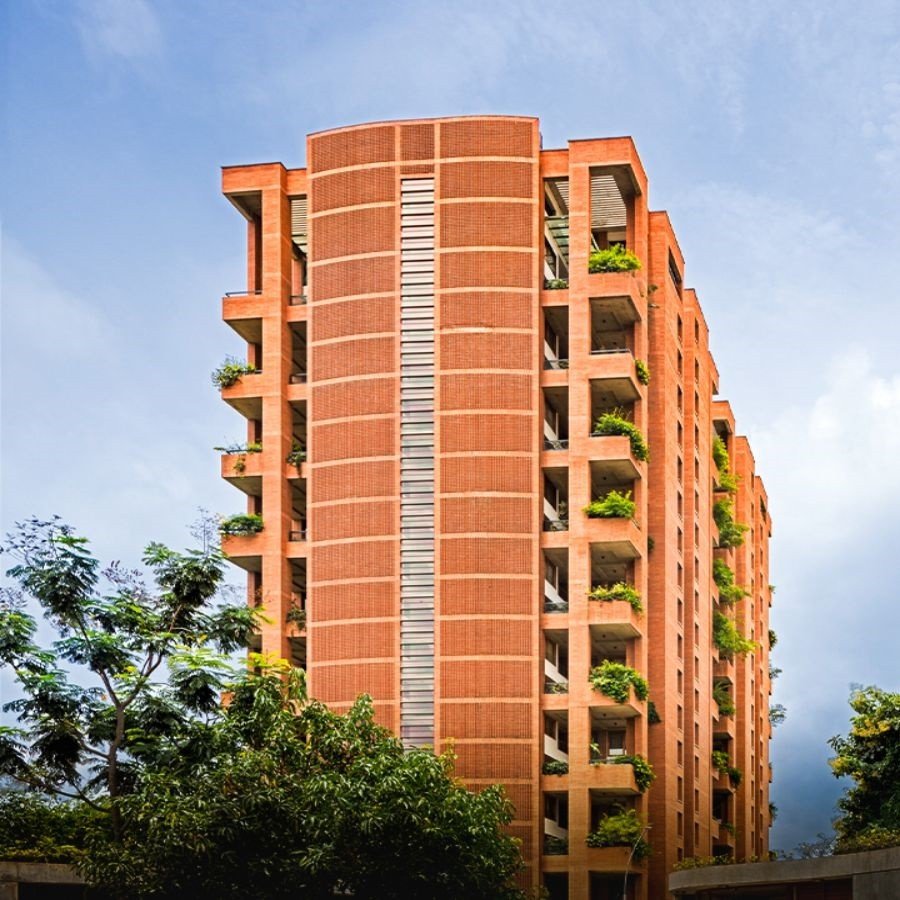
| Material identity | International interior specification | Hand-crafted wire-cut brick, timber and stone |
| Customisation | Individually customisable to owner preference | Furnished and personalised through eDesign |
| Ecological move | Miyawaki forest on the residential ground | Earth-sheltered green roofs on the villas |
Where the Embassy One North Tower vs TE Pursuit of a Radical Rhapsody Methods Diverge Most
Customisation is the sharpest illustration. Both projects promise it, but they mean different things. Embassy ONE offers a residence adapted to owner preference within a branded programme, delivered as a shell to be finished. Total Environment offers a furnished home configured through its own design tool and built by its own workshops, which means the customisation is manufactured rather than procured. For villas and penthouses in Whitefield, completion dates are linked to the buyer’s own customisation sign-off, which is unusual and tells you where control genuinely sits.
Which Method Suits Which Buyer
The assembled model suits a buyer who values legibility, particularly internationally. A Four Seasons residence explains itself instantly to a relocating executive, a tenant or an overseas purchaser, and the platform removes almost all household responsibility. The integrated model suits a buyer who cares about how the home is made, wants to shape the interior rather than accept a palette, and is willing to trust one practice across every discipline in exchange for a single point of accountability.
Neither method is a proxy for quality. They are different bets on where risk sits, and a buyer who identifies which kind of risk they find tolerable will usually find the rest of the decision straightforward.